Snowflake spend conversations often fail because they start with cost rather than demand. A warehouse, database or workload rarely becomes expensive in isolation. It becomes expensive because a business process, analytics product, data science workload or operational dependency has changed.
The narrative structure
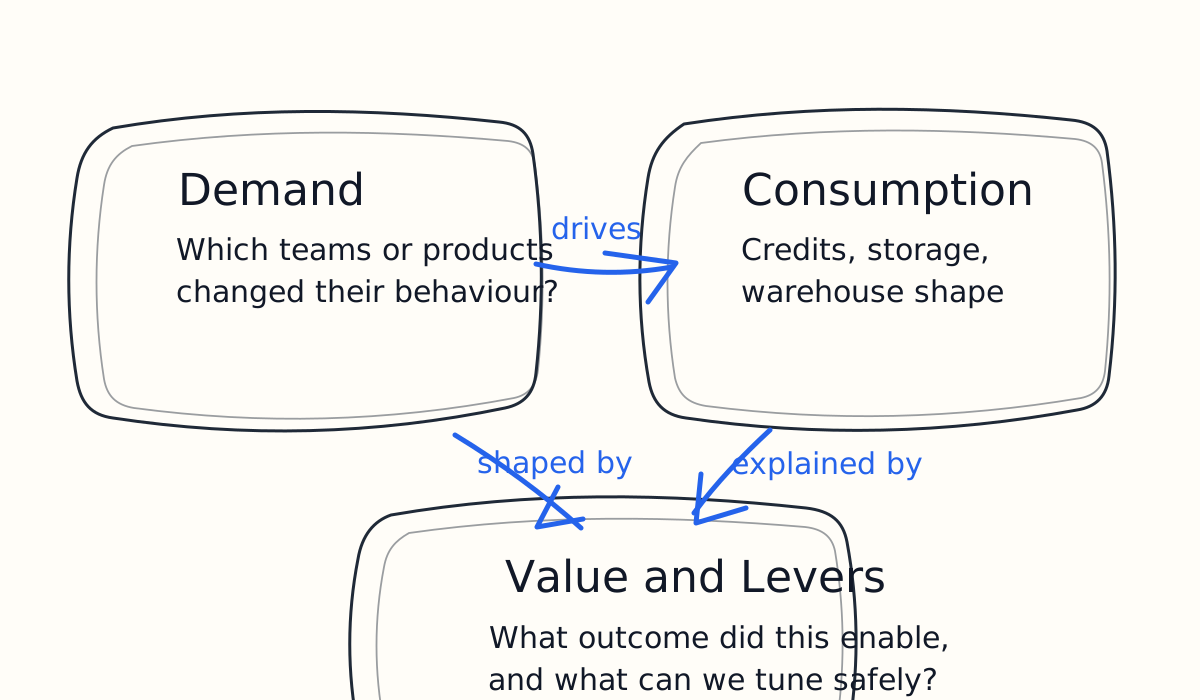
A useful Snowflake cost review should separate four things:
- Consumption: what changed in credits, storage and workload shape.
- Demand: which teams, products or business processes drove the change.
- Value: what outcome the consumption supported.
- Levers: what can be tuned, governed, scheduled, isolated or redesigned.
An Excalidraw-style sketch is useful here because it keeps the conversation causal rather than purely tabular:
Avoid false optimisation
Reducing warehouse size is easy. Reducing cost without damaging analytical throughput, operational freshness or team autonomy is harder. The goal is not simply lower spend. The goal is controlled spend with explicit business trade-offs.
Business value
A cost narrative turns platform finance from reactive challenge into proactive demand management.
Reader check Check your understanding A quick review of the causal framing behind the cost narrative.
Which option best matches the narrative framing used in this article?
Use the sketch below as your reference:
Compare the choices with the narrative structure and the sketch above. The goal is to separate demand, consumption, value, and levers rather than collapse everything into one total.
Which elements belong in a useful Snowflake cost review?
The article calls these out in the narrative structure. More than one answer is correct here.
